


Still rationing cadaver time in a world of infinite simulation?
From four cadavers a year to four thousand dissections a week. That is what 'Anatomy Unbound' looks like.
The ProblemAnatomy Teaching Has Changed Everywhere Except The Lab.
Imaging is digital. Records are digital. Lectures are hybrid. But the anatomy lab still runs on the same constraints it did thirty years ago.
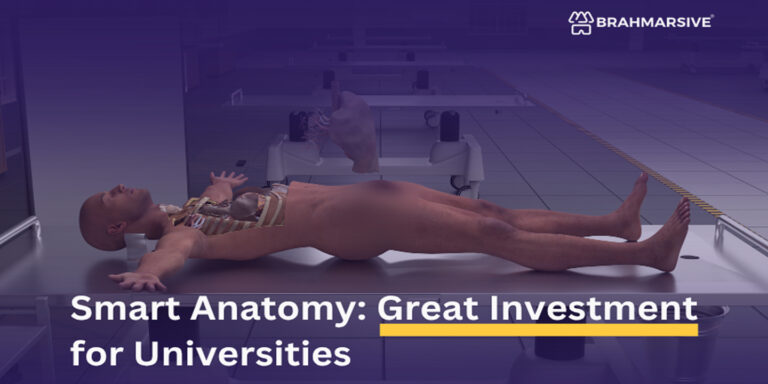
The cadaveric lab remains the gold standard — and one of the most expensive, logistically fragile teaching environments in medical education. Procurement is complex. Cold storage is costly. Biohazard disposal is regulated. And when a cohort of 120 students shares four cadavers, 110 of them are learning anatomy by watching, not doing.
The result is inconsistent learning outcomes that compound across the XXX. Students who reached the front of the table develop genuine spatial understanding. Students who didn’t are more likely to struggle at exam time. The gap isn’t talent — it’s table time.
Digital Cadaver doesn’t argue with that reality. It removes it.